The Journal
Olive oil, explained
Guides to high-polyphenol, single-estate, unfiltered Greek extra virgin olive oil — how it's made, why it matters, and how to enjoy it.

What Makes a High-Polyphenol Olive Oil?
Polyphenols are the antioxidants behind extra virgin olive oil's peppery kick. Here's what drives a high-polyphenol olive oil — harvest timing, cultivar, and processing.
Read →
Single-Estate vs. Blended Olive Oil: Why It Matters
Most supermarket olive oil is blended from many farms, countries, and harvests. Here's what 'single-estate' and 'single-harvest' really mean — and why the difference shows up in the bottle.
Read →
Why Unfiltered Olive Oil Is Worth Seeking Out
Unfiltered olive oil can look slightly cloudy — and that's a good sign. Here's what filtering removes, why some of the best Greek oils skip it, and how to store unfiltered EVOO.
Read →
Greek Extra Virgin Olive Oil & the Mediterranean Table
Greek extra virgin olive oil is built for finishing and everyday cooking alike. A simple guide to using a robust Koroneiki EVOO — from salads and bread to fish and soups.
Read →
Koroneiki vs. Kalamata Olives: What's the Difference?
Koroneiki and Kalamata are both famous Greek olives — but one is prized for oil and the other for the table. Here's the difference, and why it matters for your olive oil.
Read →
How to Taste Olive Oil Like a Pro
A simple guide to tasting extra virgin olive oil — the warm-smell-sip-slurp method professionals use, and what 'fruity, bitter, and pungent' actually mean.
Read →
Olive Oil vs. Seed Oils: What's the Difference?
Extra virgin olive oil is mechanically pressed; most seed oils are chemically refined. Here's how they differ, and where each one fits in the kitchen.
Read →
Greek vs. Italian Olive Oil: What's the Difference?
Greek vs. Italian olive oil: how cultivars like Koroneiki and Coratina differ in flavor, how each is sold, and why freshness and traceability matter most.
Read →
What Does 'Extra Virgin' Actually Mean?
What does extra virgin olive oil actually mean? The grade explained simply: mechanical extraction, taste-panel standards, and how to spot the real thing.
Read →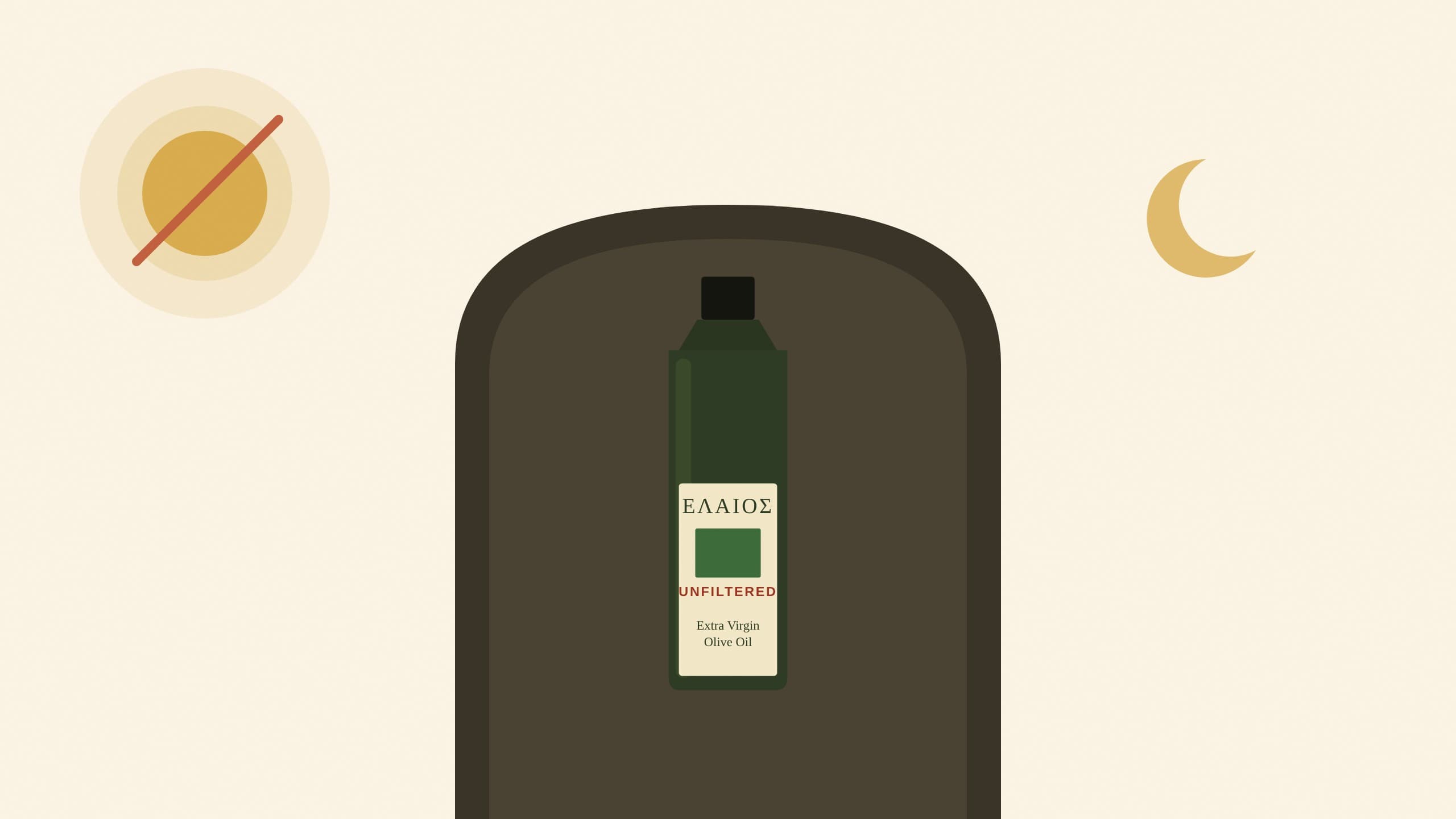
How to Store Olive Oil (and How Long It Really Lasts)
Does olive oil go bad? Yes — but slowly. Learn how to store olive oil, how long it really lasts, and the crayon-like smell that means it's gone rancid.
Read →
The Health Benefits of Extra Virgin Olive Oil, Explained Simply
Is olive oil healthy? A plain-spoken guide to olive oil health benefits: monounsaturated fats, natural antioxidants, and the Mediterranean diet tradition.
Read →