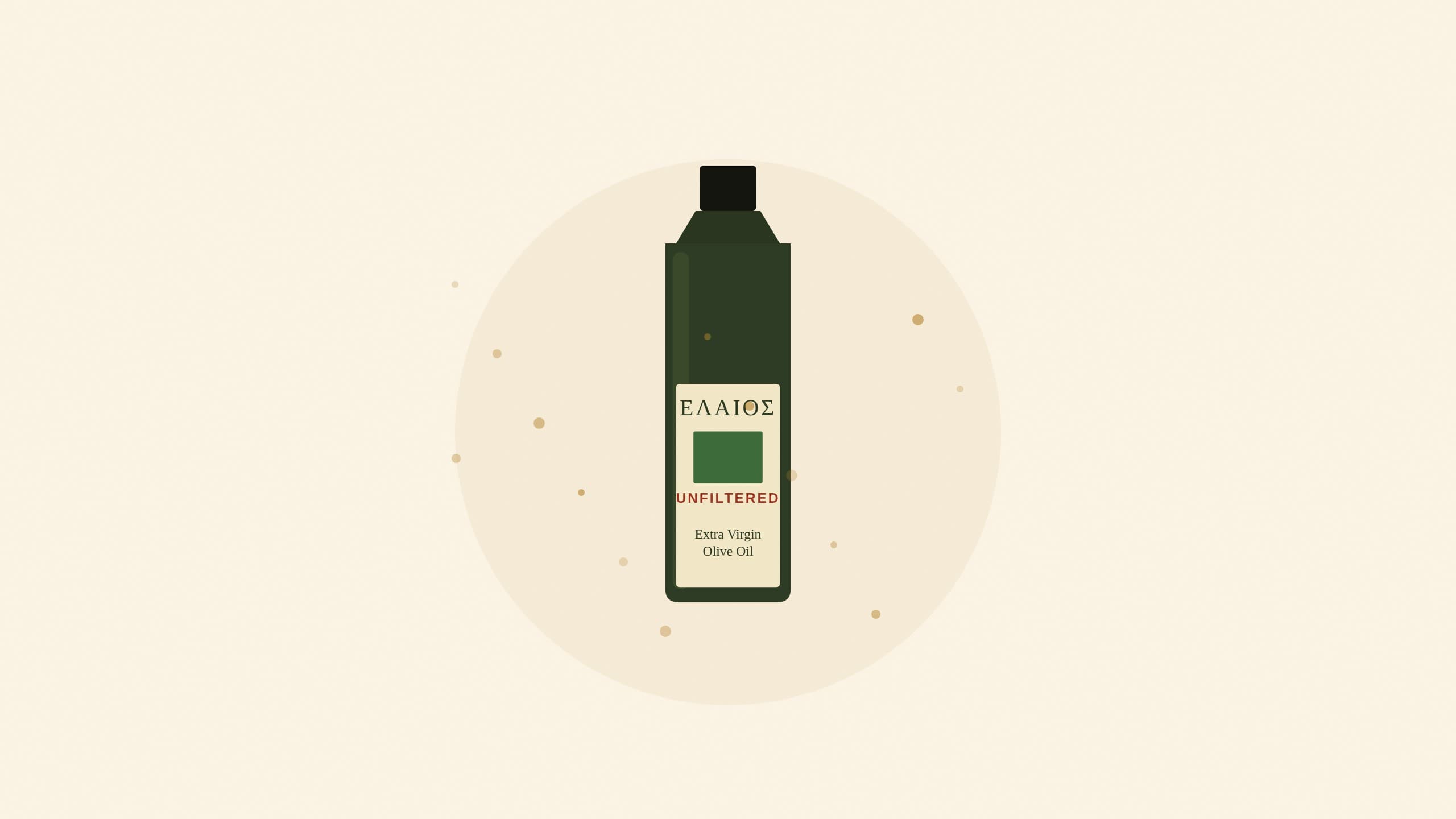
Hold a bottle of unfiltered olive oil to the light and you might see a faint haze, or a little sediment at the bottom. To a lot of people that looks like a flaw. It's actually a sign of a fresh, minimally-processed extra virgin olive oil.
What filtering removes
After pressing, many producers filter their oil to make it crystal-clear and shelf-stable for longer transit and storage. Filtering strips out the tiny suspended particles of olive fruit and water. The result looks polished — but some of the aroma, flavor, and natural antioxidants ride out with those particles.
Why leave it unfiltered
Leaving the oil unfiltered keeps those micro-particles in the bottle, and with them more of the fresh, green character and the polyphenols that give a good oil its peppery finish. It's the way oil has traditionally been enjoyed close to the source — fresh, full-flavored, and unmessed-with.
Is cloudiness a problem?
No. A natural haze or a little settling is normal and harmless in unfiltered oil — give the bottle a gentle swirl. What you do want to avoid is age, heat, and light, which are what actually degrade any olive oil.
How to store it
Keep unfiltered oil tightly sealed in a cool, dark cupboard, away from the stove and direct sunlight, and use it while it's fresh. Treated well, it rewards you with the liveliest flavor you'll get from an olive oil.
Taste single-estate Greek olive oil for yourself.
Shop the Bottle