Olive oil doesn't spoil the way milk does, but it doesn't last forever either. From the moment it's pressed, light, heat, and air are quietly working against it. The good news: a few simple habits will keep a good bottle tasting vivid down to the last pour.
Does olive oil go bad?
Yes — though not the way most foods do. Olive oil doesn't grow mold or make you sick; it goes rancid. Rancidity is oxidation: the oil's delicate fats and aromas slowly break down on contact with light, heat, and oxygen. A rancid oil won't hurt you, but the flavor — and the fragile antioxidants that make extra virgin olive oil worth buying in the first place — will be long gone. As a rule of thumb, the real shelf life of a well-made extra virgin olive oil is about 12 to 18 months from harvest, and it's at its most vivid in the first few months. Once a bottle is opened, aim to finish it within about two months.
The three enemies: light, heat, and air
Every rule for how to store olive oil comes back to the same three culprits. This is also why serious producers bottle in dark glass: it's the first line of defense, doing part of the storage job before the bottle ever reaches your kitchen. The rest is up to you, and it's simple.
- Keep it dark. Light degrades oil quickly. Dark glass helps, but even a dark bottle shouldn't live on a sunny windowsill — a closed cupboard is better.
- Keep it cool. Heat accelerates oxidation, which makes the cabinet directly above the stove one of the worst spots in the kitchen. A pantry away from the oven is ideal.
- Keep it sealed. Every opening lets oxygen in. Cap the bottle tightly right after pouring, and if you like oil within arm's reach while cooking, decant a little into a small vessel and refill it from the main bottle.
Buy by the harvest date, not the best-by date
A best-by date tells you when the producer guesses the oil will fade. A harvest date tells you when the olives were actually picked — and that's the number that matters, because two bottles with the same best-by date can be a year apart in true age. Producers who are proud of their freshness print the harvest date on the label. If a bottle carries no harvest date at all, it's often because the contents are a blend of oils of unknown ages.
The rancid test: trust your nose
Fresh extra virgin olive oil smells green — cut grass, artichoke, tomato leaf. Rancid oil smells unmistakably like crayons, putty, or stale walnuts, and it tastes flat and greasy, with none of the peppery finish a fresh oil leaves at the back of your throat. If you're unsure, pour a little into a small glass, cup it in your hands to warm it, and sniff. Smell rancid oil once and you'll recognize it for the rest of your life.
Sediment, cloudiness, and the fridge myth
Two harmless things get mistaken for spoilage. The first is sediment. An unfiltered olive oil carries fine particles of olive fruit, and over time they can settle into a soft layer at the bottom of the bottle. That's a sign of minimal processing, not a flaw — sediment is about what you see, while rancidity is about what you smell. Give the bottle a gentle turn and pour.
The second is the fridge. Refrigerated olive oil turns cloudy and thick as its natural waxes solidify — again harmless, but unnecessary, and moving the bottle in and out of the cold can build condensation inside it. You may also have heard that 'good' oil solidifies in the fridge and fake oil doesn't; that old test proves nothing either way. A cool, dark cupboard at room temperature is all a good oil ever needs.
Where Elaios fits
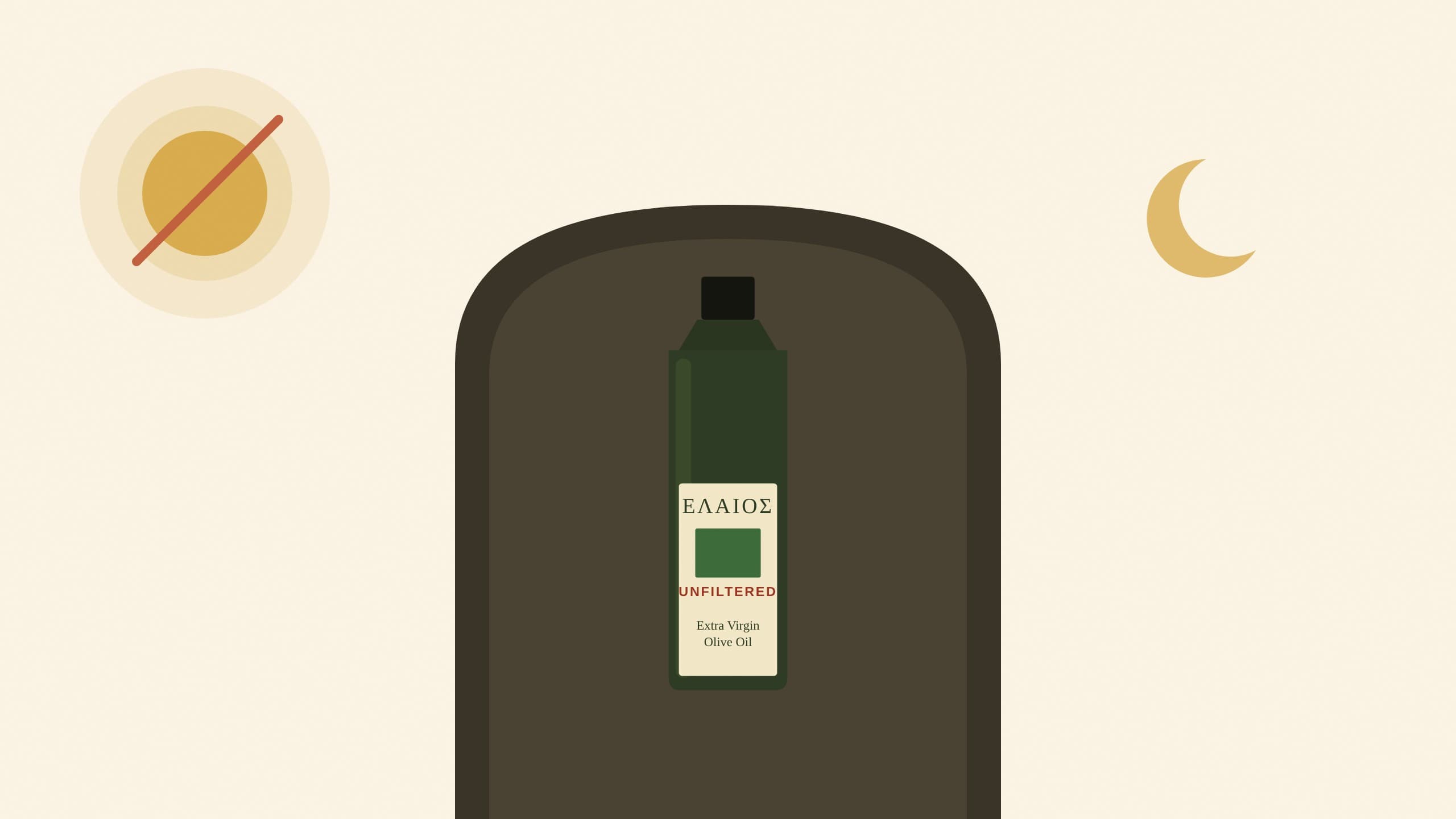
Elaios is an early-harvest, single-estate Koroneiki olive oil from the Kalamata region of the Peloponnese, cold-pressed within hours of picking and bottled unfiltered in dark glass — freshness is the entire point of how it's made. Store it in a cool, dark cupboard, keep the cap tight, and don't save it for special occasions. The best thing you can do with a fresh oil is use it generously while it's at its peak.
Taste single-estate Greek olive oil for yourself.
Shop the Bottle